How to Seal Outdoor Kitchen Countertops for Lake Norman Weather
Protect your Lake Norman outdoor kitchen countertops from heat, lake humidity, and rain. Step-by-step sealing guide for granite, stone, and concrete surfaces.
Outdoor Kitchens LKN Team
We see beautiful Lake Norman patios lose their appeal quickly when the countertops are not sealed properly. The combination of summer humidity off the water, intense UV exposure, heavy rain events, and Piedmont freeze-thaw cycles eats through cheap sealers within months. The result is staining, discoloration, and eventually surface damage that requires expensive remediation.
This guide walks through how to seal outdoor kitchen countertops for the lake region’s specific conditions. Whether your countertops are granite, soapstone, flagstone, or concrete, the right sealing approach extends material life by decades and keeps the kitchen looking new.
Why Sealing Matters Around the Lake
Lake Norman’s climate is uniquely tough on outdoor surfaces. Average annual rainfall hits 43 inches, much of it falling in heavy summer thunderstorms that drive moisture deep into porous stone. Summer humidity off the water lingers above 70 percent for weeks at a time, keeping stone surfaces damp. Winter freeze-thaw cycles expand any trapped moisture, causing spalling that breaks the surface from within.
Without proper sealing:
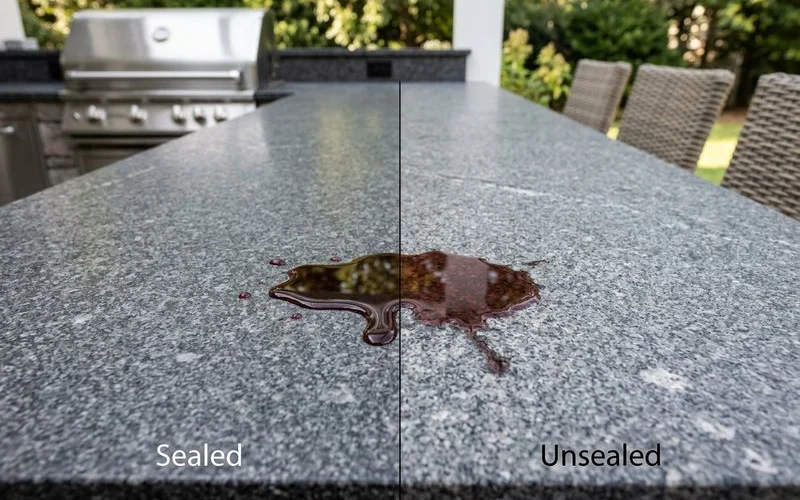
- Water absorption discolors the stone and creates dark patches.
- Oil and food stains penetrate the surface and become permanent.
- Biological growth including mold and algae can establish on damp stone.
- Mineral deposits from hard water leave white residue.
- Freeze-thaw spalling flakes the surface and exposes raw stone.
A properly sealed countertop resists all of these for years. The difference is dramatic, both visually and structurally.
Step 1: Identify the Material
Different materials need different sealers. Confirm what your countertop is before buying anything:
- Granite is the most common Lake Norman countertop material. Most granites are dense and need a penetrating sealer.
- Soapstone is naturally nonporous and does not require sealing at all, though many homeowners apply mineral oil to enhance the natural appearance.
- Flagstone, limestone, and travertine are more porous and need more frequent sealing.
- Concrete countertops require a specific concrete sealer, typically a film-forming product.
- Outdoor-rated quartz and porcelain typically do not require sealing at all.
If you are not sure what your countertop is made of, the manufacturer documentation or your installation contract should tell you. We provide every Lake Norman client with a material care guide at project completion.
Step 2: Choose the Right Sealer
Quality matters tremendously. Cheap big-box sealers fail within months in lake humidity. Professional-grade products last 1-2 years even on the most exposed patios.
For granite and most natural stones, we recommend penetrating impregnating sealers from these brands:
- Tenax Hydrex for premium long-lasting protection
- Stone Tech BulletProof for excellent oil and water repellency
- MB-4 by MB Stone Care for cost-effective performance
- 511 Impregnator as a reliable mid-range option
Look for products labeled “impregnating” or “penetrating” rather than “topical.” Penetrating sealers soak into the stone and protect from within without creating a film. Topical sealers create a glossy surface layer that scratches and yellows in UV exposure.
For concrete countertops, choose a sealer specifically formulated for concrete:
- Cheng Concrete Countertop Sealer
- Trinic Surecrete sealers
- ChemMasters-grade penetrating concrete sealer
Avoid generic clear coats that yellow in UV.
Step 3: Time Your Sealing Schedule
Lake Norman countertops should be resealed annually. Heavy-use surfaces or properties on the main channel that catch more wind-driven rain may benefit from twice-yearly sealing.
The best time to seal is mid-spring (April or May), before the heavy summer use season begins, or mid-fall (October), before winter rain saturates the stone. Avoid sealing during high humidity periods or right before forecast rain.
Sealer needs at least 24-48 hours to fully cure. Plan accordingly.
Step 4: Prepare the Surface
Sealing only works on a clean, dry surface. Skip preparation and the sealer fails to bond.
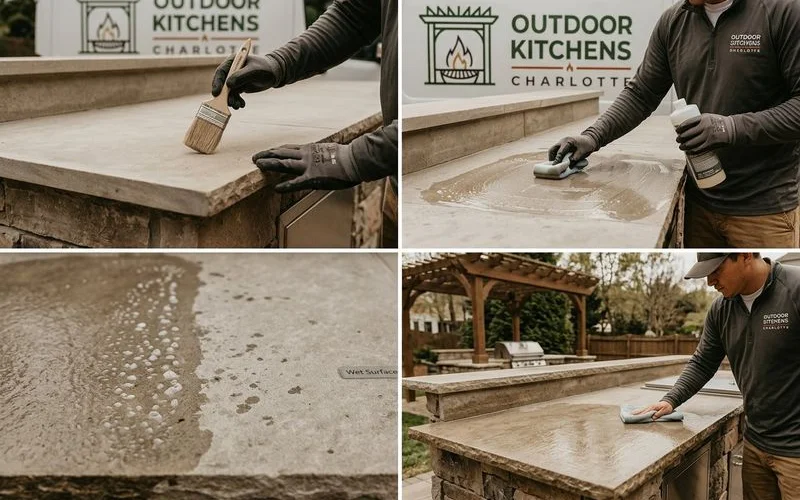
Preparation steps:
- Clear everything off the countertop.
- Clean thoroughly with a pH-neutral stone cleaner. Avoid acidic cleaners on natural stone.
- Use a soft brush or cloth to remove any biological growth, mineral deposits, or stuck-on food.
- Rinse with clean water and dry completely. The surface should feel dry and dust-free.
- If the previous sealer is still partially intact, you may need to use a stripper to remove it before applying fresh sealer.
- Mask off any adjacent surfaces that should not contact sealer (appliances, walls, painted trim).
For deeply ingrained stains, a poultice may be needed to draw out the stain before sealing. We can apply poultices as part of an annual maintenance visit.
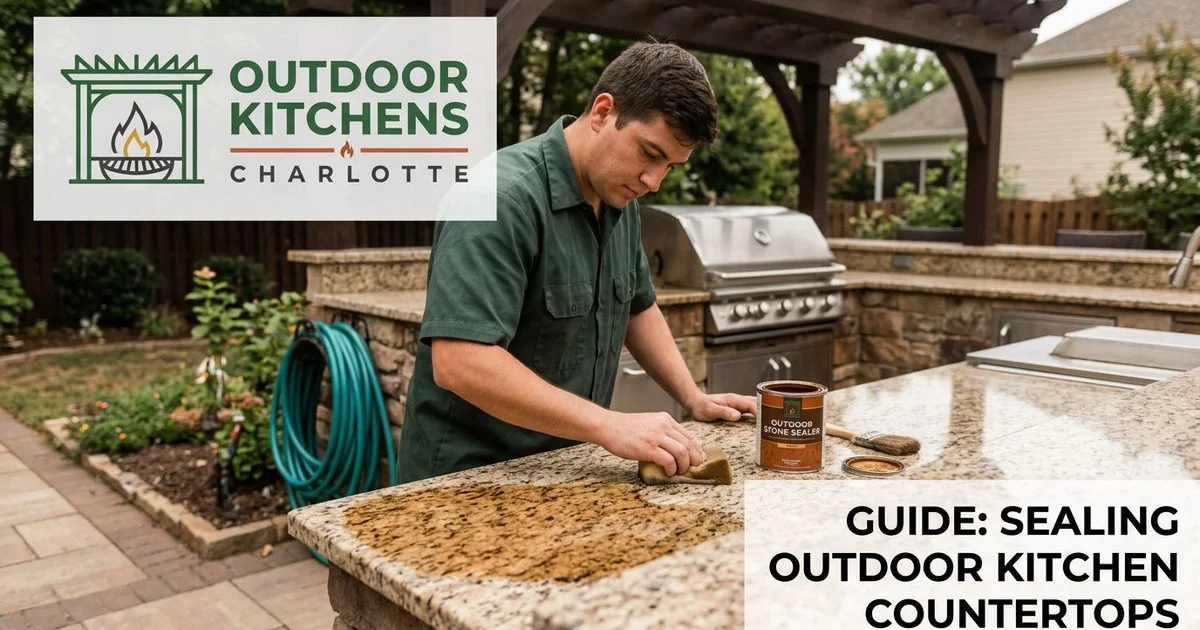
Step 5: Apply the Sealer
The application process is straightforward:
- Pour a small amount of sealer onto the countertop or onto a clean lint-free cloth.
- Spread evenly across the surface using a foam pad, lambswool applicator, or clean cloth.
- Allow the sealer to soak in for the time specified on the product label, typically 5-15 minutes.
- Wipe off any excess with a clean dry cloth before the sealer dries on the surface. Excess sealer left to dry creates a sticky film that is difficult to remove.
- Allow the surface to cure undisturbed. Most sealers need 24 hours before light use and 48-72 hours before heavy use.
- Apply a second coat if recommended by the manufacturer. Many premium sealers benefit from two thin applications.
Work in manageable sections. A typical 30 square foot countertop takes 30-45 minutes to seal properly with two coats.
Step 6: Test the Seal
Verify the seal is working by performing a simple water test. Place a few drops of water on the surface. Properly sealed stone causes water to bead up rather than soak in. If water absorbs into the stone, the sealer is not bonded correctly and needs another application.
Repeat this test annually before deciding whether to reseal. If water still beads after a year of use, you can extend the resealing interval. If water absorbs, it is time to reseal.
Step 7: Daily Care After Sealing
Proper daily care extends sealer life significantly:
- Wipe down countertops after cooking with mild soap and water.
- Avoid harsh acidic cleaners that break down sealers (vinegar, lemon juice, citrus cleaners).
- Clean spills promptly, especially oils, wines, and acidic foods.
- Use trivets under extremely hot pots and pans, even on heat-resistant granite.
- Cover the countertop during extended unused periods (winter months) to reduce UV and rain exposure.
For homes near the cove or main channel, salt-free spray is not a factor (Lake Norman is fresh water), but the sustained humidity still works on the seal. Wiping down the countertop after dewy mornings during summer extends sealer life.
When to Hire Professional Maintenance
For most Lake Norman homeowners, annual sealing is straightforward DIY work. Hire professional maintenance when:
- The countertop has deep stains that need poultice treatment.
- The sealer has fully failed and aggressive stripping is needed.
- You have multiple countertop materials that need different products and approaches.
- You simply do not want to think about it.
Outdoor Kitchens LKN offers an annual maintenance program for clients. We inspect the entire kitchen, deep-clean the countertops, address any stains, and apply professional-grade sealer. Pricing typically runs $300-$600 depending on countertop square footage.
Long-Term Protection Strategy
Beyond annual sealing, two strategies extend countertop life:
- Cover when not in use. A fitted cover protects from UV, rain, and dust during off-season periods. This alone can double sealer effectiveness.
- Address stains immediately. A blueberry stain wiped up in 30 seconds is nothing. The same stain left for 30 days requires remediation.
For a deeper read on countertop materials and how each performs around the lake, see our guide on the best outdoor kitchen countertop materials.
Getting Help
If your Lake Norman countertops are showing wear, our outdoor kitchen countertops service includes refurbishment and replacement options. We can also handle annual maintenance so the kitchen always looks new. Reach out for a free assessment and we will let you know whether annual sealing or full replacement is the right call for your specific situation.
Outdoor Kitchens LKN Team
Outdoor Living Design Specialist
15+ years designing outdoor kitchens across the Lake Norman region.