DIY vs Professional Outdoor Kitchen Installation in Lake Norman: What You Need to Know
Should you build your Lake Norman outdoor kitchen yourself or hire a pro? Compare costs, timelines, ARC review, and risks of DIY vs professional installation.
Outdoor Kitchens LKN Team
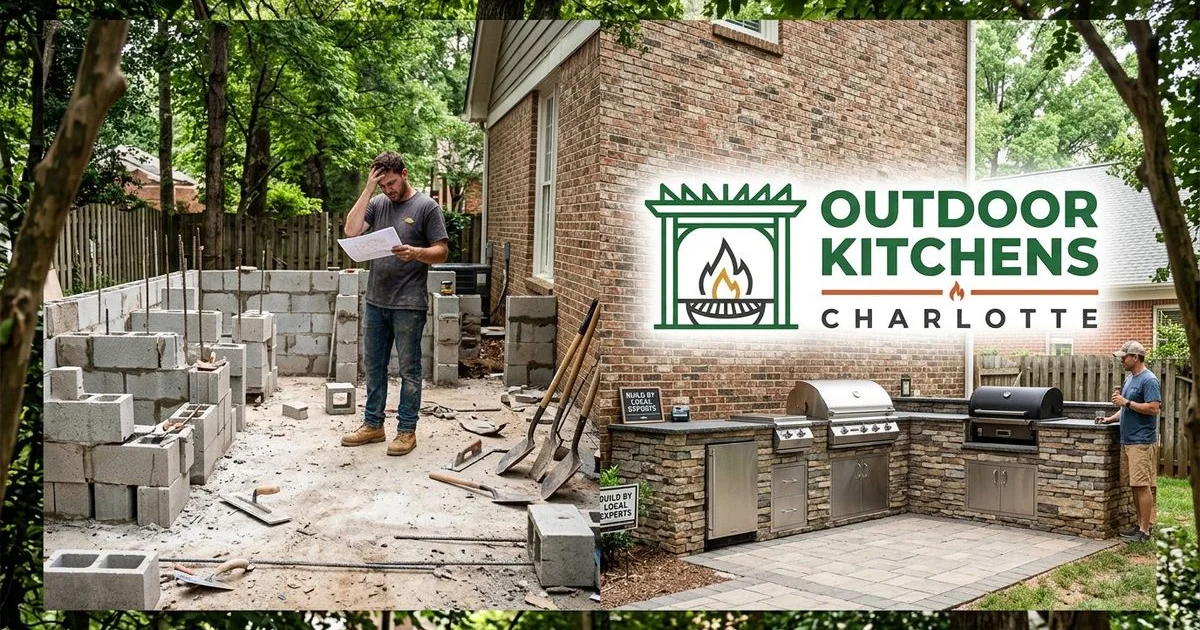
You have probably seen the viral videos where someone builds a backyard oasis in a single weekend. They stack some cinder blocks, drop in a grill, and suddenly have a perfect entertainment space. The reality on Lake Norman is more complicated. Lakefront humidity, ARC review at communities like The Point and The Peninsula, county permits, and the way sloped lots interact with retaining walls all turn a “simple” weekend project into a long, costly mistake.
This guide walks through where DIY makes sense around the lake, where it absolutely does not, and how to tell which side of the line your project sits on.
What DIY Can Realistically Cover
For a small, simple grill station, DIY is feasible. We see homeowners successfully tackle:
- A freestanding grill on a poured concrete pad.
- A modular grill island kit assembled from prefabricated panels.
- Surface-level masonry refresh on an existing patio.
- Installation of pre-made fire pit kits in compliance with local codes.
These projects share a common feature: no permitted gas line, no electrical work beyond a GFCI outlet, no covered structure, and no ARC review. Total spend typically runs $3,000 to $15,000, mostly for materials and a rental concrete mixer.
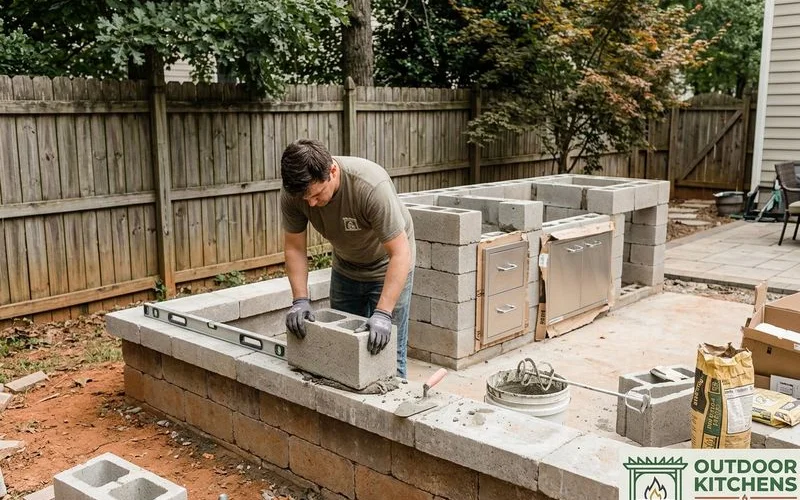
Where DIY Goes Wrong on Lake Norman
The lake region adds complications that other markets do not face:
Duke Energy shoreline buffer. Lots that touch the lake have a regulated buffer zone. Building below the 760-foot full-pond contour without specific approval is not allowed. We have seen DIY projects torn down because the homeowner did not realize the patio was inside the buffer.
ARC committees. Communities like The Point, The Peninsula, and River Run have detailed architectural review processes. ARC committees regularly reject submissions that lack matching brick, oversized roof structures, or incomplete utility plans. A DIY project that does not pass ARC has to be modified or removed, often at the homeowner’s expense.
Gas line work. Natural gas connections must be installed by licensed professionals and pressure-tested before a county inspection. DIY gas connections fail inspection and can be a liability if a leak causes a fire or carbon monoxide event.
Sloped lots. Many lakefront properties slope significantly toward the water. Building a level cooking platform requires engineered retaining walls with proper drainage. DIY retaining walls fail, sometimes spectacularly, especially after the heavy rainfall events common in spring.
Lakefront humidity. Cheap stainless and untreated steel framing rust quickly in lake-region humidity. The Saturday-special grill island built from box-store materials is often unusable within three years.
What Professional Installation Includes
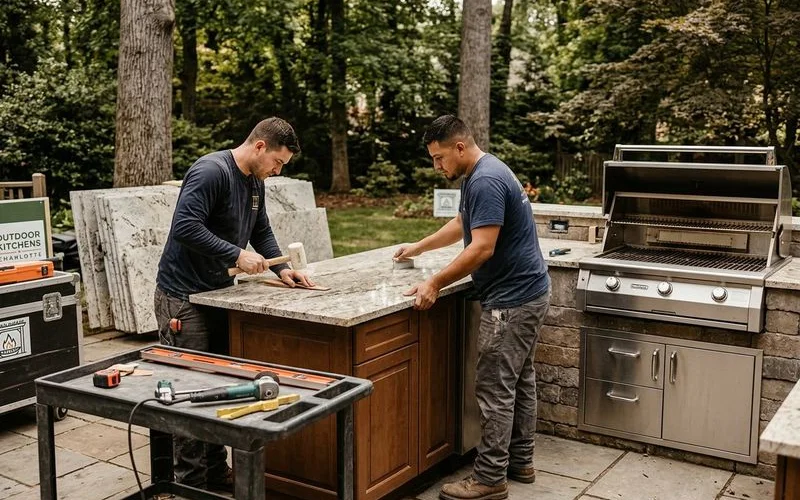
When you hire Outdoor Kitchens LKN or another reputable lake-region contractor, the scope covers far more than physical construction:
- Site assessment including slope, drainage, and shoreline buffer compliance.
- Permit applications in Iredell, Mecklenburg, Lincoln, or Catawba county.
- ARC submission packages with renderings and material samples for HOA review.
- Engineered foundations, retaining walls, and pavilion structures.
- Licensed gas, electrical, and plumbing trades.
- Marine-grade hardware and material selection appropriate for the water exposure.
- Final inspection coordination and warranty.
Cost Comparison: DIY vs Professional
This is where the numbers get interesting. A DIY project sometimes appears cheaper on paper, but the hidden costs add up quickly.
| Cost Element | DIY | Professional |
|---|---|---|
| Materials | $5,000-$15,000 | $15,000-$60,000 (premium materials) |
| Tools and rentals | $500-$2,000 | Included |
| Labor (your time) | 100-300 hours unpaid | Included |
| Permits and inspections | $200-$600 | Included |
| Mistakes and rework | $1,000-$10,000 | Rare, covered by warranty |
| Resale value impact | Variable, often lower | Strong positive impact |
For a typical Lake Norman luxury build, professional installation runs $30,000 to $150,000+ depending on scope and pavilion size. DIY for the same square footage usually lands $15,000 to $40,000 with hundreds of hours of homeowner time and significant compromises in quality.
Timeline: How Long Does Each Take?
A DIY project typically spans three to six months of weekends, longer if mistakes require rework. The pace is dictated by family schedules, weather, and the homeowner’s energy after a full work week.
A professional install on Lake Norman runs four to eight weeks for a standard build, eight to fourteen weeks for a covered pavilion or luxury project. ARC review at communities like The Point can add two to four weeks at the front end. The work runs continuously, weather permitting, with a clear schedule and weekly updates.
When DIY Genuinely Makes Sense
We are honest about this: not every lake-region homeowner needs a professional crew. DIY is a fine path if:
- The project is small, freestanding, and has no permitted utilities.
- You enjoy hands-on work and have the time.
- The home is not in an HOA with ARC review.
- The budget is genuinely tight and the alternative is no project at all.
The catch is that “small and simple” rarely matches what most Lake Norman homeowners actually want. Once you start considering a built-in grill, gas connection, sink, or covered structure, professional installation becomes the right answer.
When You Should Definitely Hire a Pro
Hire a professional contractor if any of the following apply:
- The home is in an HOA with ARC review.
- The lot is on the lake and within the Duke Energy buffer zone.
- The design includes a covered pavilion, pergola, or motorized roof.
- The project requires gas line extension, electrical sub-panel additions, or plumbing.
- The lot slopes significantly toward the water.
- Budget is over $25,000 (you should expect professional craftsmanship at that level).
For a deeper read on cost ranges, see our guide on how much an outdoor kitchen costs.
Hybrid Approaches
Some homeowners split the work. The professional handles the foundation, framing, gas, electric, and structural masonry. The homeowner handles cosmetic finishing, like staining a pergola, planting around the patio, or installing decorative tile. This approach works well when the homeowner has the right skills for finish work but does not want to risk the structural and utility components.
We are happy to scope projects this way if it makes sense for your situation. The key is clarity on which trades cross the licensed-professional line.
How Outdoor Kitchens LKN Approaches This
Our outdoor kitchen installation service handles the full scope, from initial design through final county inspection. We pull permits in all four counties around the lake, prepare ARC submission packages, run gas and electrical to code, and warranty the work.
If you are weighing DIY against hiring a pro for your Lake Norman project, we offer free on-site consultations to walk through what your specific build actually requires. There is no obligation to proceed, and we will give you an honest assessment of where DIY makes sense and where it does not.
Outdoor Kitchens LKN Team
Outdoor Living Design Specialist
15+ years designing outdoor kitchens across the Lake Norman region.