Stone Veneer vs Natural Stone for Lake Norman Outdoor Kitchens: Cost and Durability
Should you choose stone veneer or natural stone for your Lake Norman outdoor kitchen? Compare costs, durability, ARC approval, and lakefront performance.
Outdoor Kitchens LKN Team
Building an outdoor kitchen on Lake Norman is a significant financial decision, and the stone selection drives both cost and long-term performance. Owners frequently ask whether stone veneer or full natural stone is the right choice, especially when ARC committees at communities like The Point and The Peninsula have specific material expectations.
This guide compares the two options head-to-head with the lake region’s specific conditions in mind.
What Is Stone Veneer?
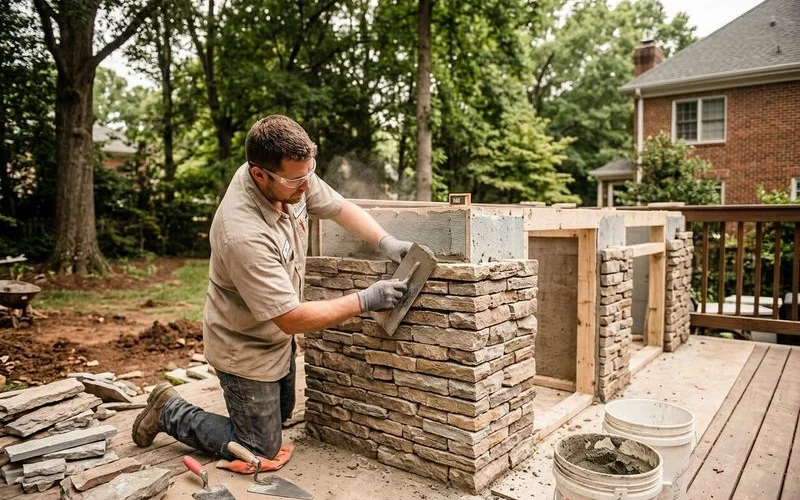
Stone veneer is a thin slice of natural stone or a manufactured stone product designed to be applied to a structural backing. Two main categories exist:
Natural stone veneer is real stone cut to roughly 1-1.5 inches thick. It uses the same material as full-thickness stone but in a thinner profile. The face appearance is identical to full natural stone because it is the same stone.
Manufactured stone veneer (cultured stone) is concrete cast in molds taken from real stone. Brands like Cultured Stone, Eldorado Stone, and ProVia produce manufactured veneer that mimics natural stone visually. The face appearance is good but not as varied as real stone, and the material is concrete rather than stone.
For Lake Norman outdoor kitchens, we strongly recommend natural stone veneer over manufactured veneer. The performance difference around lake humidity is substantial.
What Is Full Natural Stone?
Full natural stone uses pieces of stone that are 4 inches thick or thicker, applied as full structural elements. The stone is the same as veneer (sandstone, limestone, granite, fieldstone) but in full thickness rather than sliced thin.
Full natural stone construction requires:
- Substantial structural support to handle the weight
- Reinforced concrete foundations sized for the additional load
- Skilled masons to lay the heavy material
- Longer construction timelines
The result is a kitchen that looks visually identical to natural stone veneer but uses considerably more material and construction effort.
Side-by-Side Comparison
| Factor | Natural Stone Veneer | Full Natural Stone |
|---|---|---|
| Material cost (per sq ft) | $15-$30 | $35-$70 |
| Installation cost (per sq ft) | $20-$40 | $45-$85 |
| Total installed (per sq ft) | $35-$70 | $80-$155 |
| Visual appearance | Identical face | Identical face |
| Structural support needed | Minimal | Substantial |
| Foundation requirements | Standard concrete pad | Reinforced foundation |
| Weight per sq ft | 8-12 lbs | 35-50 lbs |
| Installation timeline | Faster | Slower (heavy lifting) |
| Lakefront durability | Excellent (sealed) | Excellent |
| ARC approval | Generally accepted | Generally accepted |
Cost Analysis for a Typical Lake Norman Kitchen
For a typical 100 square foot stone application (covering an L-shaped kitchen base and a stone-faced section of pavilion):
- Natural stone veneer: $3,500-$7,000 total cost
- Full natural stone: $8,000-$15,500 total cost
The difference of $5,000-$8,500 is significant. For most Lake Norman projects, that money is better spent on premium appliances, motorized roof systems, or upgraded countertops rather than on full-thickness stone.
Visual Differences
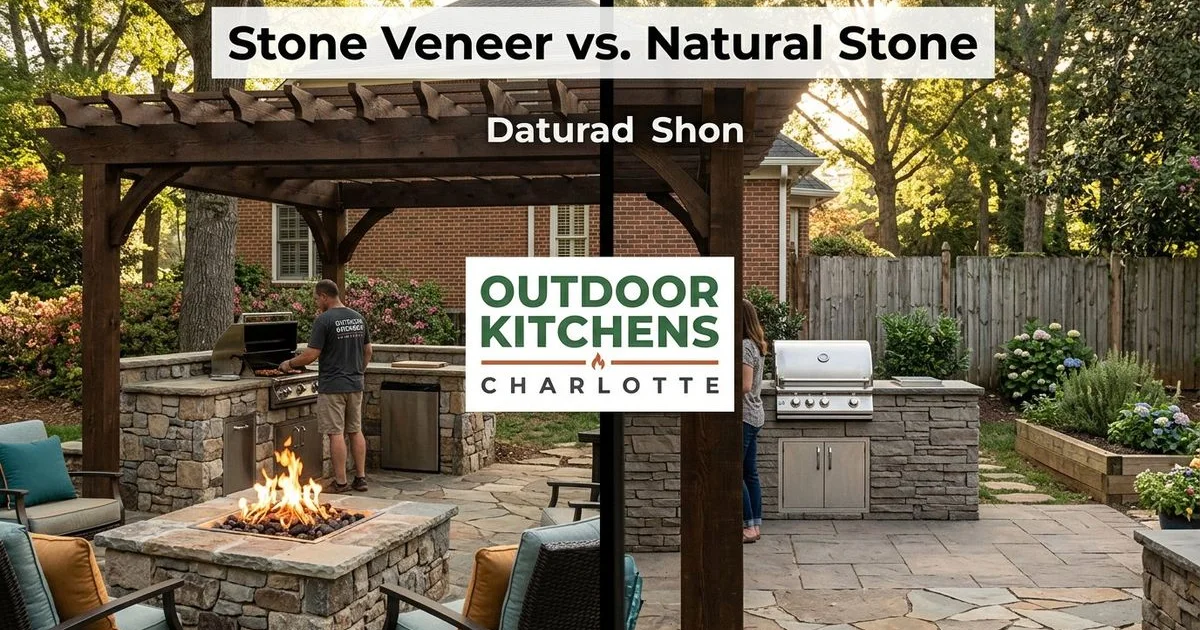
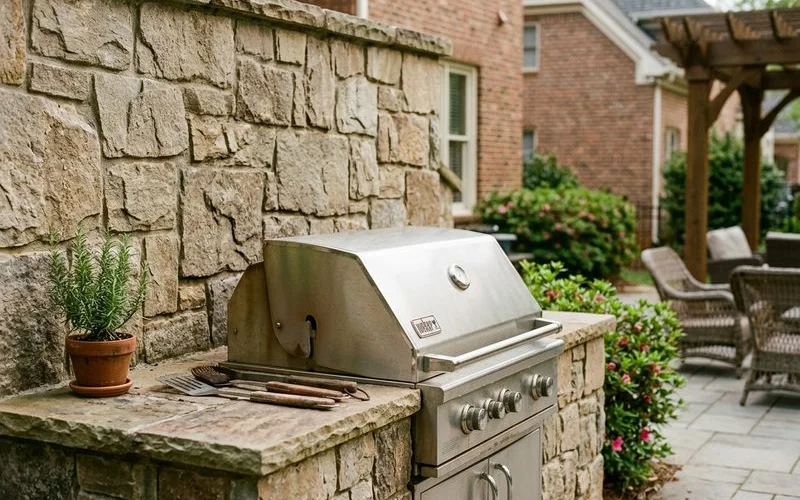
Here is the surprising part: in finished form, stone veneer and full natural stone look essentially identical. Both use the same stone material on the visible face. The only visual cue that a structure uses veneer rather than full stone is the depth of the stones at corners and edges.
We address this with corner pieces and L-shaped veneer cuts that recreate the appearance of full-thickness stone at corners. The result is indistinguishable from full natural stone construction in finished form, even on close inspection.
Lakefront Performance
Both veneer and full stone perform exceptionally well in lake humidity when properly sealed and installed. The key durability factors are:
- Sealing. Penetrating stone sealer applied at installation and maintained annually.
- Drainage. Proper installation prevents water from penetrating behind the stone.
- Quality of stone. Premium quarried stone outperforms cheap material regardless of veneer or full-thickness application.
- Joint quality. Polymer-modified mortar and properly tooled grout joints.
Around Lake Norman, we have stone veneer installations 15+ years old that remain pristine. The veneer/full-stone choice has minimal long-term durability impact when both are installed by skilled masons with quality materials.
For more on stone selection and care, see our guide on the best outdoor kitchen countertop materials.
ARC Approval Considerations
Both options typically receive ARC approval at communities like The Point, The Peninsula, and River Run. Committees focus on:
- Material match to the home’s exterior
- Color and pattern coordination
- Mortar joint color and style
- Quality of installation craftsmanship
Whether the stone is full thickness or veneer is rarely a deciding factor for ARC committees. They evaluate the visual result, not the structural detail. We prepare ARC submission packages with photo samples and detailed specifications as part of our custom outdoor kitchen design service.
When Full Natural Stone Makes Sense
Despite our general recommendation for veneer, full natural stone is the right choice in specific scenarios:
- Historical or heritage homes where authenticity matters and the existing home is full natural stone construction.
- Stand-alone walls that are not attached to a kitchen base, where structural support comes from the stone itself.
- Outdoor fireplaces with substantial mass where the visual weight of full stone is part of the architectural intent.
- Custom features like seating walls and retaining walls where full stone serves a structural purpose.
For most kitchen islands and pavilion walls, veneer delivers identical visual results at substantial cost savings.
When Stone Veneer Makes Sense
Stone veneer is the right choice for the vast majority of Lake Norman outdoor kitchen projects:
- Standard kitchen island construction
- Pavilion wall facing
- Retaining wall facing where the structural backing handles the load
- Most ARC-reviewed projects (the visual result is identical)
- Projects with constrained budgets that prefer to invest savings in appliances or covers
The veneer approach is industry standard for residential outdoor kitchens across the lake region.
Manufactured Veneer: When to Avoid
Manufactured stone veneer (cultured stone) costs less than natural stone veneer but performs worse in Lake Norman conditions:
- The concrete material does not breathe like real stone, leading to moisture issues
- UV exposure causes fading of pigmented surfaces over years
- Repeated freeze-thaw cycles can cause spalling
- Repair and color matching becomes difficult as the original color fades
For a 5-10% additional cost, natural stone veneer outperforms manufactured veneer dramatically. We do not install manufactured veneer on outdoor kitchens around the lake.
Real Lake Norman Project Examples
Project 1: The Peninsula, Cornelius. 80 sq ft of stone application using stacked ledgestone veneer. Material match to home’s exterior. Total stone cost: $4,200. Result: ARC-approved on first submission, indistinguishable visually from full stone.
Project 2: Trump National-area home. Large pavilion with 200 sq ft of stone, including a full-height fireplace. Used full natural stone for the fireplace mass and stone veneer elsewhere. Total stone cost: $11,500. Result: substantial architectural element that anchors the entire pavilion.
Project 3: Sailview, Denver. Modern lakefront build with limited stone application (50 sq ft on a single accent wall). Used stone veneer with clean modern joint pattern. Total stone cost: $2,400. Result: subtle accent that reads beautifully in renderings and in finished form.
Stone Selection Beyond Veneer vs Full
The veneer vs full-thickness decision is one factor among many. Other stone selection considerations include:
- Type of stone: Stacked ledgestone, fieldstone, flagstone, limestone, sandstone, granite.
- Color palette: Earth tones, grays, multi-color, monochromatic.
- Pattern: Random, ashlar, coursed, dry-stack appearance.
- Joint style: Heavy mortared, dry-stack, flush, recessed.
Each of these affects visual character more than the veneer-vs-full decision. For more on stone selection in outdoor kitchen context, see our stone and masonry outdoor kitchens service page.
Getting Started
The right stone for your Lake Norman outdoor kitchen depends on your home’s existing materials, your ARC requirements, your budget, and your aesthetic preferences. Outdoor Kitchens LKN brings stone samples to every consultation so you can see options against your home and the lake backdrop. Reach out for a free on-site visit and we will help you make the right choice.
Outdoor Kitchens LKN Team
Outdoor Living Design Specialist
15+ years designing outdoor kitchens across the Lake Norman region.