Gas vs Wood-Burning Fire Pit on Lake Norman: Pros, Cons, and Costs
Should you choose a gas or wood-burning fire pit for your Lake Norman backyard? Compare convenience, cost, ambiance, wind resistance, and code requirements.
Outdoor Kitchens LKN Team
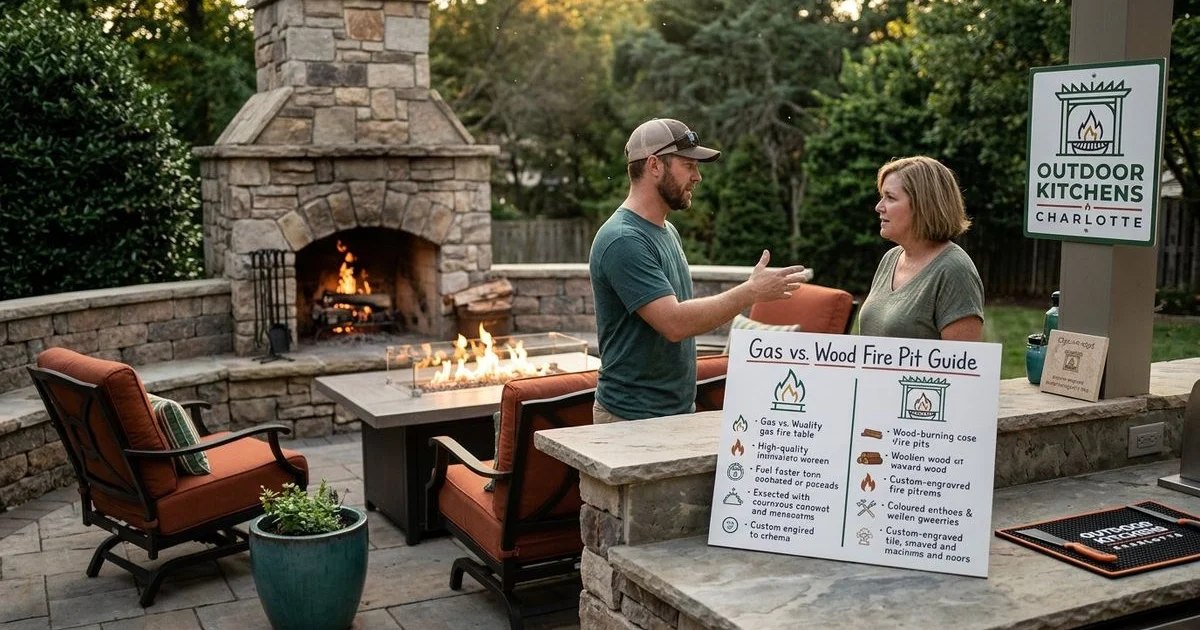
We hear the same debate from Lake Norman property owners every season. Gas vs wood-burning fire pit, with pros, cons, and costs, are exactly the factors that determine how often the patio actually gets used. The right choice depends on how you entertain, where the property sits relative to wind, and what your HOA will approve.
This guide walks through both options with the lake region’s specific conditions in mind so you can decide with confidence.
Gas Fire Pits: Convenience First
Gas fire pits ignite instantly with the press of a button or twist of a knob. The flame height is adjustable, there is no smoke or ash, and there is nothing to clean up at the end of the evening. For Lake Norman homeowners who entertain frequently or simply want a fire that does not require effort, gas is the answer.
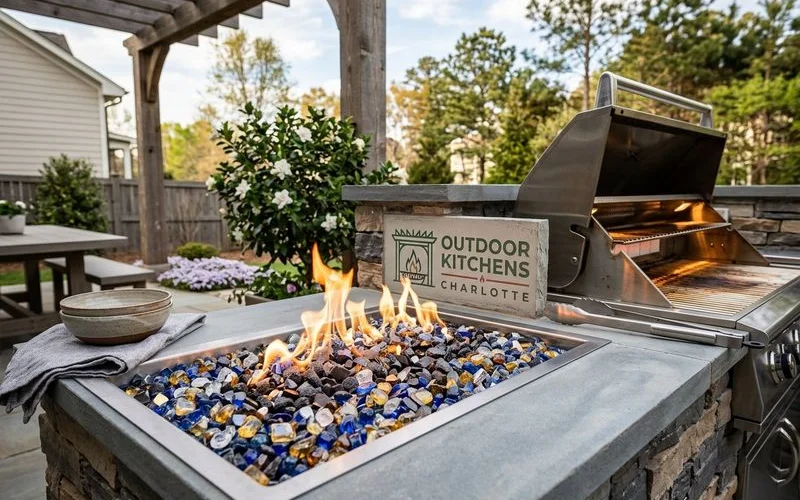
Common gas fire pit configurations include:
- Round stone surrounds with decorative fire glass or lava rock fill.
- Linear gas fire features that run 4-8 feet long across a patio edge.
- Fire pit tables that combine a gas fire with a usable table surface.
- Custom rectangular pits built into seating walls and planters.
Most Lake Norman gas fire pits run on natural gas extended from the home or outdoor kitchen line. On rural lakefront properties without natural gas service, propane works fine with a concealed tank under the patio.
Pricing for a built-in gas fire pit typically runs $4,000 to $12,000 installed, depending on materials and size. Custom stone surrounds and integrated seating walls push the higher end.
Wood-Burning Fire Pits: The Traditional Experience
A wood-burning fire pit delivers the classic campfire experience. Crackling flames, the scent of burning oak or hickory, and the ritual of building and tending a fire are all part of the appeal. Some homeowners are passionate about this experience and would not consider gas. Others find the work involved more than they want to deal with on a regular basis.
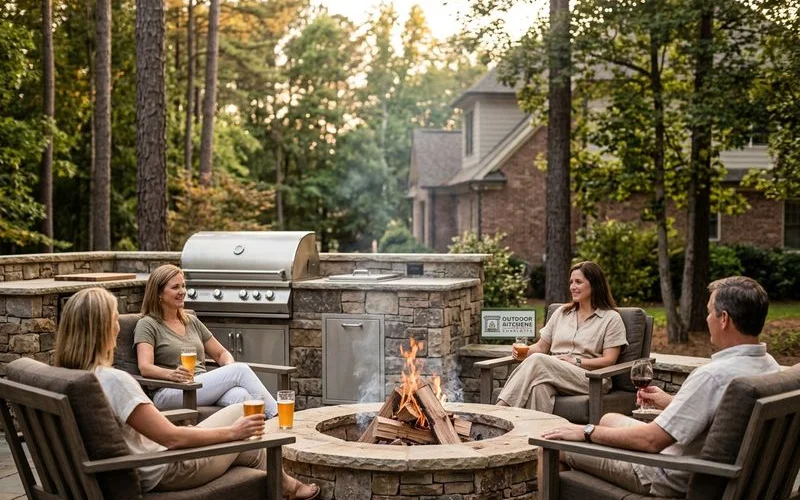
Construction options include:
- Stacked stone surrounds with steel fire bowls or refractory firebrick interiors.
- Flagstone or boulder rings for a more rustic, organic look.
- Built-in seating walls that double as landscape retaining elements on sloped lots.
Pricing for a custom wood-burning fire pit typically runs $5,000 to $15,000 installed. The cost is comparable to a gas fire pit because the masonry, foundation, and surrounding hardscape represent most of the project value.
Comparison Table
| Factor | Gas | Wood-Burning |
|---|---|---|
| Startup | Instant | 15-30 minutes |
| Smoke | None | Yes, depends on wind |
| Cleanup | None | Ash removal needed |
| Ambiance | Steady flame | Crackling, dynamic flame |
| Cost (installed) | $4,000-$12,000 | $5,000-$15,000 |
| Operating cost | Low gas usage | Firewood ($4-8 per fire) |
| Wind resistance | Lower | Lower (smoke direction) |
| Indoor pavilion use | Possible with venting | Not recommended |
| Code complexity | Simpler | Stricter clearances |
Wind Considerations on Lake Norman
Properties on the main channel and exposed lots in Governors Island, parts of The Peninsula, and Northview Harbour catch significant wind. Both fire types struggle with wind, but they struggle differently.
Gas fire pits face flame disruption. Strong gusts can blow out the flame, and most modern gas fire pits include automatic shutoff valves that close the gas supply when the flame goes out. This is a safety feature, but it can frustrate homeowners on breezy nights.
Wood-burning fire pits face smoke direction problems. The wind off the cove blows smoke directly into the seating area on certain days. Repositioning the fire pit relative to prevailing wind helps, but no fire pit fully solves wind-driven smoke.
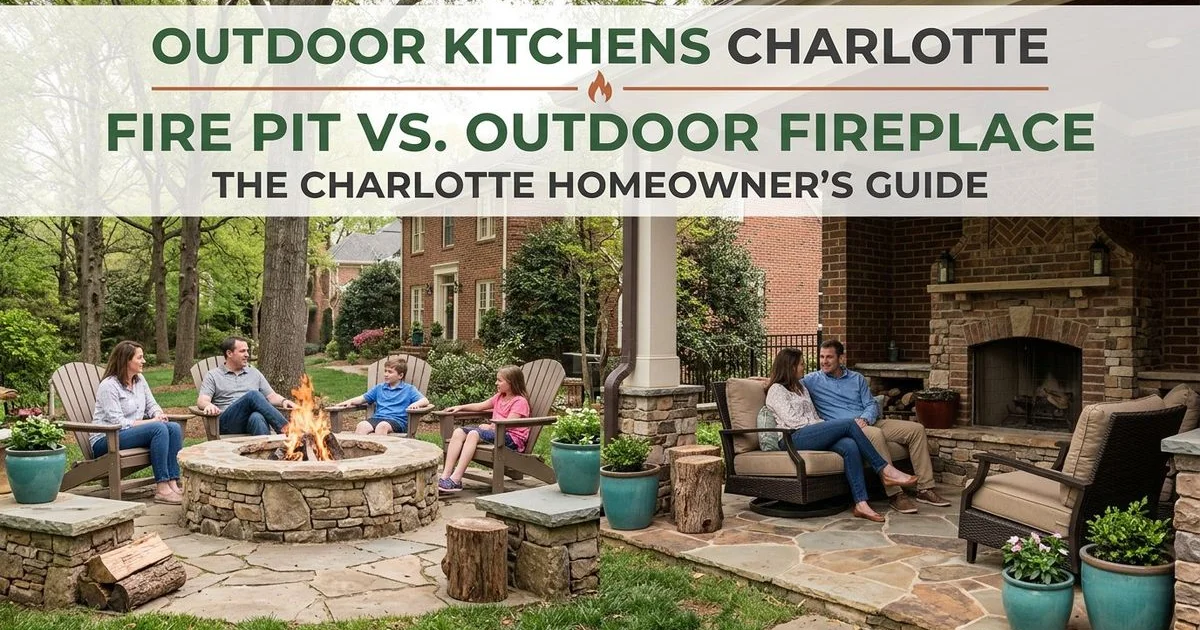
For wind-exposed lakefront lots, an outdoor fireplace with a chimney often performs better than either fire pit type. The sheltered firebox and channel-up smoke handling make fireplaces the smarter pick on the most exposed properties. For more on that decision, see our guide on fire pit vs outdoor fireplace.
Code and Safety
Both options must comply with county fire codes in Iredell, Mecklenburg, Lincoln, and Catawba. Key requirements include:
- Minimum 10-foot clearance from any combustible structure.
- Additional clearance from vegetation for wood-burning units.
- Spark screens for wood-burning fire pits when located near homes.
- Gas shutoff valves on gas units must be accessible and labeled.
Wood-burning units require slightly more attention to clearances because of ember risk. We confirm all setbacks during the design phase. For more on local permits, see our guide on whether you need a permit for an outdoor kitchen on Lake Norman.
Operating Costs
Gas fire pits run cheap. Natural gas usage for a typical gas fire pit costs about $1-2 per hour of operation. Heavy users spend roughly $20-40 per month during the cool season.
Wood-burning fire pits cost more per fire but feel less like an ongoing expense because the cost is paid up front. A bundle of seasoned hardwood costs $8-15 in the Lake Norman area. Most evening fires use 2-4 bundles, putting the per-fire cost at $15-50 depending on duration.
Maintenance
Gas fire pits need annual burner inspection. Fire glass or lava rock should be cleaned occasionally. The internal gas regulator may need replacement every 10-15 years. None of this is hands-on for most homeowners; we handle it as part of an annual maintenance visit.
Wood-burning fire pits need ash removal after every few uses, periodic mortar inspection, and chimney sweeping for any vented units. Stone and masonry should be inspected after Piedmont winter freeze-thaw cycles for any new cracks or mortar gaps.
Which Should You Choose?
For most Lake Norman homeowners, the right answer comes down to lifestyle:
- Choose gas if you entertain frequently, value convenience, want zero cleanup, or have an HOA that prefers cleaner-burning options. Gas is also the right answer for under-pavilion installations where smoke would be a problem.
- Choose wood-burning if you genuinely enjoy the traditional fire experience, do not mind tending the flames, and have an open patio with good wind orientation.
- Consider an outdoor fireplace instead if your property is wind-exposed or you want the architectural impact of a chimney structure.
Integration with Your Outdoor Kitchen
Whichever fire feature you choose, integration with your outdoor kitchen matters. We design fire features 15-20 feet from cooking zones to keep heat and smoke from interfering. On larger Lake Norman properties, the fire feature often becomes a distinct gathering zone separate from the cooking and dining areas, creating a clear three-zone outdoor living layout.
Outdoor Kitchens LKN handles both gas and wood-burning fire pits as part of our outdoor fireplaces and fire pits service. Reach out for a free on-site consultation and we will walk the property to recommend the right option for your specific patio, wind exposure, and entertaining style.
Outdoor Kitchens LKN Team
Outdoor Living Design Specialist
15+ years designing outdoor kitchens across the Lake Norman region.